Stranded Deep 2 River Exploration
How the endless river, yellow kayak, and hand-crafted sites replace island hopping.
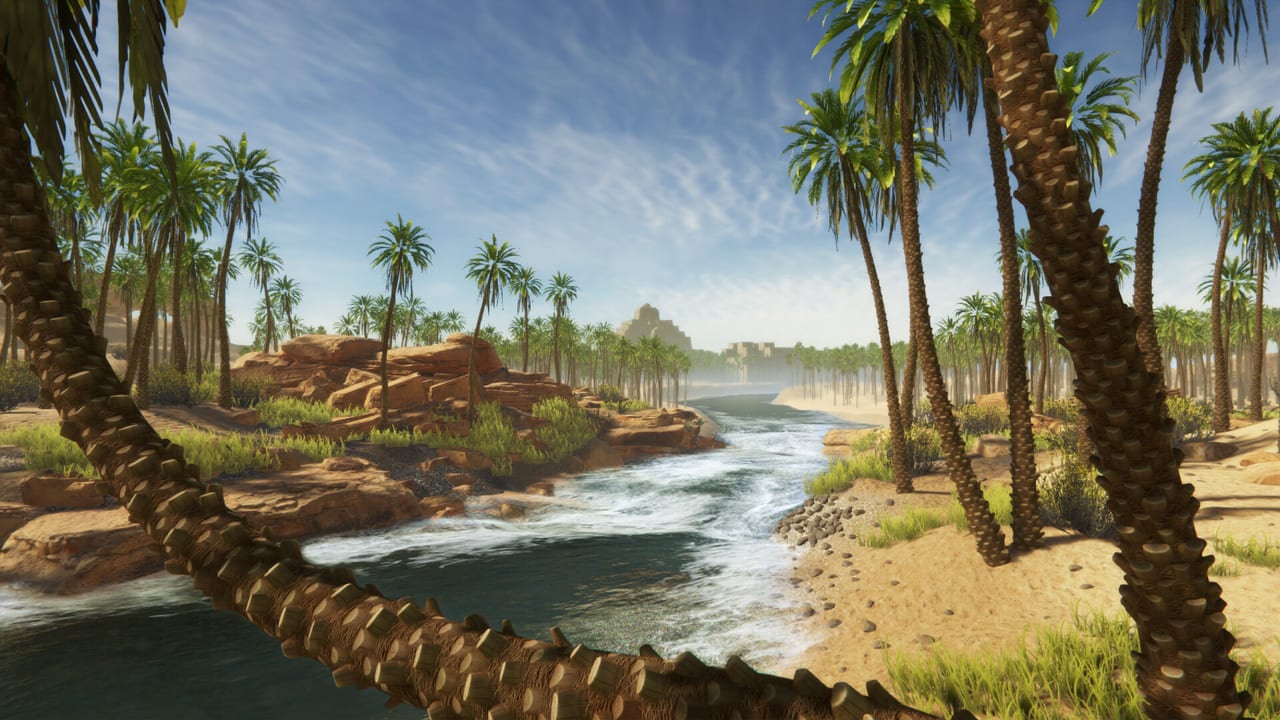
The marketing line is easy to quote and easy to misunderstand. “Endless river world” does not mean a looping screensaver. North Beach Games’ FAQ is specific: the map is procedurally generated and continues for as long as you do. Hand-crafted locations are scattered through that generation. Each of those authored sites is supposed to hold important materials, rare items, and traces of the world’s history. The river is a spine. The desert is the meat. Your job is to decide how far from the spine you walk.
This guide is the travel manual that sits between getting started and the biome tier list. It is written for people who used to point a raft at a green pixel on the horizon and want to know what replaced that instinct.
Kayak first, raft when the junk pile grows
Steam tells you to navigate rapids and treacherous water with a kayak or a raft. Sam Edwards added the emotional detail: the yellow life raft is reborn as a yellow kayak. Screenshots back that up — bare feet on a yellow tube, paddle in frame, canyon walls repeating in the water.
Use the kayak as the scout. It is the craft you take into a new bend when you do not know whether the next bank is a hippo lawn. Use a raft or floating home when you have already decided the stretch is yours. Floating-home building covers that conversion. Mixing the two is the point. A kayak that never docks is a thirst problem. A raft that never undocks is how you miss the authored cabin around the next oxbow.
Rapids are named on purpose. Fast water is listed next to growls and tracks as a readable danger. If the original taught you that ocean weather was the travel tax, the sequel is pointing at current. Scout from a height or a quiet eddy. Do not discover a drop with your storage on the bow.
Biomes along one channel
Official language lists canyons, dunes, valleys, lakes, open prairies, and “a whole new world of biomes.” Early Access launches with several biomes and hand-crafted locations, then grows. That modular foundation is why the studio talks about years of updates instead of a frozen 1.0 island set.
Travel rules that already follow from the text:
- Canyons funnel predators and shade. Good for cover, bad if you cannot reverse.
- Dunes and open sand are exposure problems. Read how to survive before a noon hike.
- Lakes and slow water look safe and concentrate animals. Check wildlife.
- Prairies and palm corridors are the postcard. They also hide wrecks and ruins in the distance, which is bait.
- Diving is the desert’s vertical. Edwards compared harsh inland pockets to the old ocean floor: gear up or do not come back.
Every world is different; no two journeys are the same. That is Steam, not a seed-map community. Do not wait for a static wiki cartograph of “the” river. Wait for a language of tells: wreck silhouettes, reed density, rock color, animal highways.
Hand-crafted locations are the reason to detour
Procedural rivers get dull if every bend is noise. The studio’s answer is authored places dropped into the flow: abandoned structures, broken vehicles, salvage that implies someone failed here before you. Those sites are where rare materials and lore live. They are also where you linger long enough for the food chain to notice.
A sane detour loop looks like this. Park the kayak with an escape heading. Clear a visual on tracks. Loot what you can carry without drowning. Return to the floating home before greed writes the rest of the story. If a location feels like a set piece, it probably is — treat it as a dungeon with a current, not as a second island to colonise forever.
Lore is optional. The FAQ says there is no linear story. Pull the threads if you want A.R.I.D. and the redacted blocks on the official site. Survival does not require the ARG energy. Exploration does get more interesting if you keep notes.
How far is too far
“How far will you go?” is the tagline because the map does not politely end. The practical limiter is logistics. Thirst, exposure, storage, and the animals that share your road. Push inland when you have spare water discipline and a reason — better materials, a ruin, a Cartographer idea. Turn back when the watch says the meters will not survive the walk.
Co-op will change the math if a partner can hold the craft. Until player count is public, plan as a solo scout. Use official links when the studio posts a map-language blog; this page will follow that language instead of inventing coordinates.
The river is not a loading screen between bases. It is the game. Learn to read it the way the first title taught you to read weather on open water, and the desert stops being a gimmick.
Frequently Asked Questions
Quick answers to the most common questions.
Is the Stranded Deep 2 map actually endless?
Official FAQ: the map is procedurally generated and continues as long as you do, with hand-crafted locations along the way.
Kayak or raft?
Both are listed. The yellow kayak is the spiritual raft. Use it to scout; use a raft or floating home to haul a camp.
Are there hand-crafted islands?
Not Pacific atolls. Hand-crafted locations sit in a generated desert-river world: wrecks, structures, and authored sites with rare gear.
Should I leave the river?
Yes, for rarer rewards, with the risk that you may not make it back. Prep using how to survive.
Will the world change after launch?
Early Access is built to add biomes, locations, and wildlife over two to three years. See the roadmap.