Stranded Deep 2 How to Survive
The four needs, desert heat, and why the river is both a lifeline and a trap.
Survival is the opening sentence of Stranded Deep 2, not the whole book. North Beach Games still wants you to earn the right to stay: manage health, hunger, thirst, and exposure, read the land, and treat nature as the enemy. The desert changes the texture of those four meters. Shade, current, depth, and animal tracks matter in a way a palm-tree atoll only hinted at.
This guide is a systems primer. It does not invent calorie tables. It translates the Steam feature list, the official FAQ, and Sam Edwards’ New Ground blog into habits you can practice the week Early Access opens.
The four needs, restated for a desert
Steam lists health, hunger, thirst, and exposure as the Early Access core. Health is the fail state. Hunger and thirst are the clocks that force movement. Exposure is the desert’s special pressure: sun, water, and weather instead of a polite tropical dusk.
Thirst will likely dominate the first hours because you are never far from a river that may not be safe to trust. Fast water, animal traffic, and salvage dives all sit on the same channel you drink from. Hunger pushes you into the food chain described on wildlife — fish and lizards on the low end, hippos and crocodiles on the high end, with you somewhere in the middle. Exposure is why standing on open sand at noon is a decision, not a screenshot. Heat stroke is the spiritual successor to the original’s sunburn, except the new biomes include canyons that shade you and dunes that do not.
Health is what remains when the other three slip. A crocodile rush, a failed dive, or a raft smash in rapids can skip the meters and go straight to a corpse. The store copy says danger is readable if you look: a distant growl, tracks in the sand, fast moving water. That sentence is the real tutorial. Audio and environmental tells are supposed to precede the hit.
The watch is back on purpose
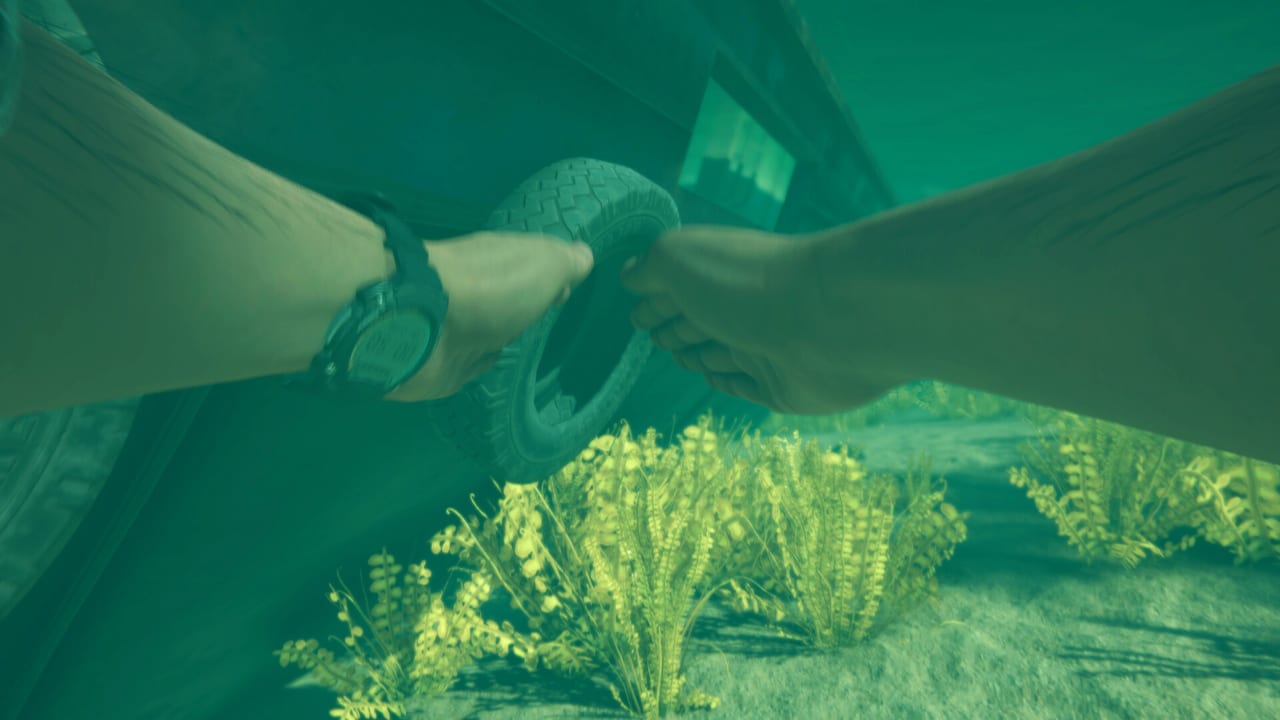
Edwards confirmed the iconic watch returns “better than ever” to manage day-to-day survival. In the original it was a compact HUD you could actually believe a castaway would wear. Expect the same philosophy: glanceable time, status, and enough diegetic chrome that you are not staring at a sci-fi overlay while a hippo closes.
Until the UI is public, train the habit anyway. Check needs before you leave the kayak. Check again before a dive. The underwater screenshot language on this wiki — watch on the wrist, tire in the hands, wreck above — is the studio showing that scavenging and status live in the same first-person body. You are not a floating camera. You are a person who can drown with a tyre in both hands.
Heat, water, and when to leave the river
The river is the lifeline and the killbox. Stay on it too long and you share a lane with apex predators. Leave it too far and thirst plus exposure win. The New Ground blog says you will not be walking a barren waste; you explore a wilderness and dive into harsher desert the way you once dove a reef. Gear up, weigh the risk, and accept that “too deep” can mean you do not make it back.
Practical translation for launch week:
- Treat banks with reeds and tracks as contested, not campsites. Cross-check the wildlife threat tiers.
- Use canyons for shade and as funnels. They hide you from sun and concentrate animals. Read biome priorities before you settle a pretty gorge.
- Salvage wrecks and abandoned structures, but budget breath and exit routes. Broken vehicles are listed as riverside loot, not free lunch.
- Keep a mobile out. Floating-home building exists so a bad bank does not become your grave marker.
Food chain, not farm sim
Animals roam, hunt, and follow a real food chain. You are part of it and not at the top. That is Steam’s sentence, not flavor text. Survival in Stranded Deep 2 is less “punch a shark until the ocean respects you” and more “read who is hunting whom, then take the gap.” A hippo encounter is already the poster image of the reveal. Edwards said a crocodile steamrolling you is worse than any shark he had in the first game. Plan fights as last resorts. Plan avoidance as the skill.
If you insist on combat, wait for Early Access numbers. This page will not fabricate damage values. It will say: carry a reason to disengage, keep the kayak pointed downstream, and do not craft your identity around a stone tool until the sandbox proves it.
Tie survival to travel and news
Needs only make sense if you can move. Read river exploration for kayak, raft, and rapids. Read getting started if you still need the wishlist and spec checklist. When the studio publishes meters, recipes, or a public roadmap, those notes land on updates rather than as silent edits to this primer.
Stay alive is the marketing headline. The actual skill is leaving a stretch of river before it owns you. Pack water discipline, shade discipline, and a camp that can move. Everything else is loot.
Frequently Asked Questions
Quick answers to the most common questions.
What survival meters are confirmed?
Health, hunger, thirst, and exposure are listed for Early Access. Exact UI layout is not public.
Does the watch return in Stranded Deep 2?
Yes. Sam Edwards said the iconic watch returns to manage day-to-day survival.
Is heat a bigger threat than in the original?
The setting is a scorching desert. Exposure is a named need, and shade versus open dune will matter. See biome priorities.
Should I fight crocodiles and hippos early?
Treat them as apex threats. Read wildlife and the threat tier list before you pick a fight.
How does building help survival?
A floating home lets you leave a deadly bank without abandoning your camp.