Stranded Deep 2 Wildlife and Food Chain
You are in the chain, not above it. Learn the desert river’s animals before they learn you.
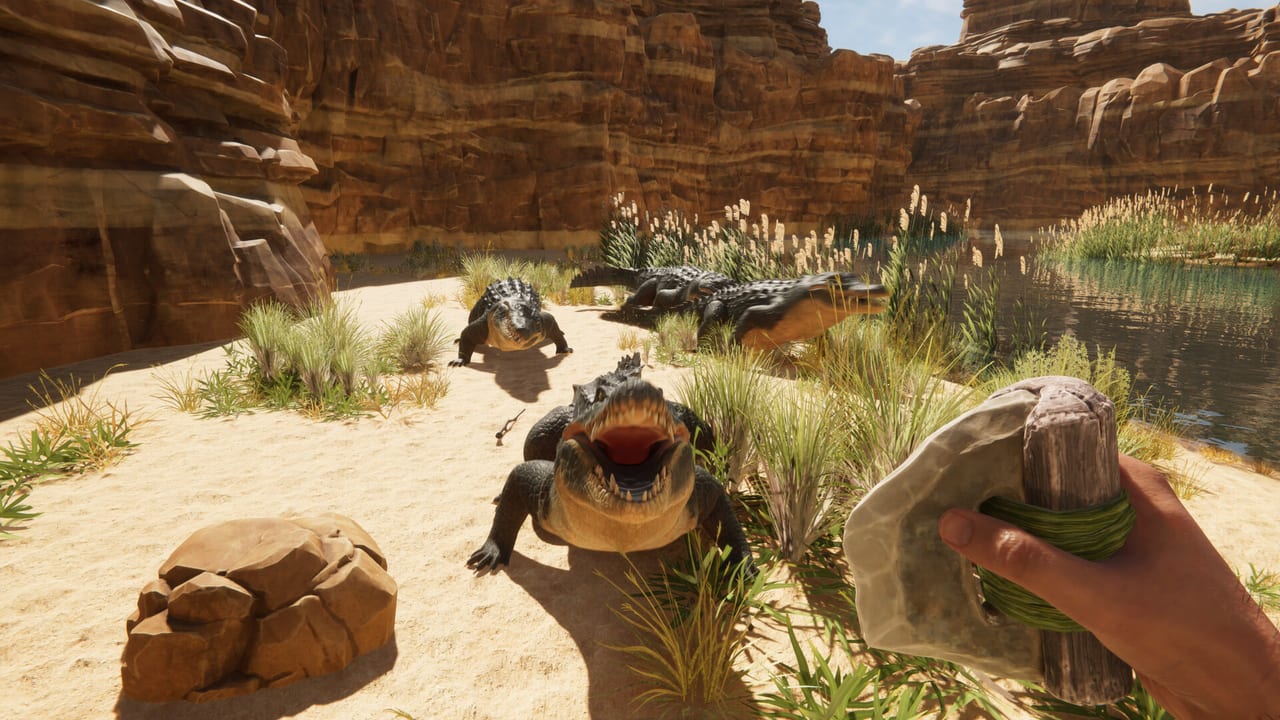
The first Stranded Deep made sharks into a personality. You heard the music, you saw the fin, you either stabbed a stick or you swam like a fool. Stranded Deep 2 keeps the idea that animals should scare you and throws away the idea that you are the only hunter that matters. Steam’s living-world blurb is the whole thesis: animals roam, hunt, and follow a real food chain. You are part of it. You are not at the top.
Sam Edwards went further in the New Ground post. The desert is full of life from small fish and lizards up to new apex predators — crocodiles and hippos. He said a crocodile steamrolling toward you is more terrifying than any shark encounter he had in the original. The reveal screenshots agree. One frame is a hippo jaw around the kayak. Another is three crocodiles on a sandy bank while you hold a stone tool that suddenly looks decorative.
This guide is the bestiary without fake HP. For a ranked view, use the wildlife threat tiers. For where animals will likely concentrate, use biome priorities.
Read the tell, then move
Official copy says danger is recognizable: a distant growl, tracks in the sand, fast moving water. That is your combat tutorial until lock-on meters exist.
Tracks mean the bank is a commute, not a campsite. Relocate the floating home instead of decorating the mud. Growls mean stop paddling into the sound to “see what it is.” Fast water means the river can pin you against a body that swims better than you. Combine tells. A quiet canyon with no birds is not peace; it is a funnel.
The watch and the four needs on how to survive still decide whether you can afford a detour. Wildlife is how those meters end early.
Apex: crocodiles and hippos
Treat both as run-ending until Early Access proves a cheese. Crocodiles are shown as group pressure on a bank — multiple bodies, land speed, a mouth that does not care about your crafted rock. Hippos are shown as water-column violence against the kayak. In real ecology hippos are territorial in rivers; the studio is clearly playing that note even if it has not published aggro radii.
Czech Mates (August 2025) said the initial animal shortlist for release was feature-locked and a “hero animal” was almost complete — the 2026 reveal made that hero obvious. Do not farm them. Do not assume a raft deck is a safe spectator seat. Do not stand in reeds to screenshot a jaw. Scout with the yellow kayak, keep an exit heading, and only linger at a hand-crafted wreck if the water is empty.
If co-op is in your plan, assign a watcher. Co-op will not publish a player count here, but two pairs of eyes are the only anti-croc technology we can already recommend.
The rest of the chain
Fish and lizards are named as the small end. They exist to feed something, including you. That is the loop: you hunt the bottom, the top hunts you, and mid-tier animals will have their own arguments that do not include your story. A living food chain means corpses, chases, and stolen kills. It also means a quiet pool can be empty because something larger already ate.
Dive salvage — tires, wrecks, the watch underwater — puts you in the same volume as whatever owns that hole. Budget breath for an animal, not just for a loot animation. River exploration covers why those dives are worth it. This page covers why they are not free.
Birds, herds, and unlisted species will arrive in updates. The Early Access promise is regular additions of wildlife alongside biomes. Do not freeze a mental Pokedex. Freeze a method: identify, listen, leave.
You can reshape their house
Digging terrain and redirecting the river is on the Steam feature list. That is a wildlife tool if the simulation is real. A rerouted channel might dry a nest or open a beach you should not have opened. Until rules exist, treat landscaping as loud. Anything that changes water also changes who uses the water.
Cartographer creators should read Cartographer 2.0 with the same warning. A pretty custom gorge that funnels crocs at spawn is a meme until it is your friend’s first death.
After you survive the postcard
The hippo shot will get clicks. The skill is boring: distance, current, and a camp that can leave. Keep getting started for the wishlist context, and watch updates when a real bestiary patch lands. Until then, assume the desert has a food chain that does not need you, and play like a guest who brought a kayak to a territory dispute.
Frequently Asked Questions
Quick answers to the most common questions.
Which animals are confirmed for Stranded Deep 2?
Official blogs name fish, lizards, crocodiles, and hippos, plus a living food chain. More species are planned during Early Access.
Are sharks in the sequel?
The reveal focus is desert-river apex predators. Do not expect the Pacific shark loop as the mascot threat.
How do I avoid crocodiles?
Read tracks and growls, skip reed banks, and keep the kayak pointed at an exit. Ranked advice lives on the wildlife tier list.
Can animals fight each other?
Steam says they hunt and follow a real food chain, not only aggro on the player. Exact behaviours are unconfirmed.
Should I fight or flee in the first hours?
Flee. Pair this page with how to survive and river exploration.